
Eating well on a tight budget shouldn’t feel impossible. If you’re searching for practical ways to stretch your grocery dollars without sacrificing flavor or nutrition, you’re in the right place. This article is designed to help you build meals around cheap healthy pantry staples that are versatile, filling, and easy to turn into satisfying dishes.
We’ll break down how to stock your kitchen strategically, combine low-cost ingredients for maximum flavor, and use simple meal prep hacks to reduce waste and save time. Whether you’re feeding a family or cooking for one, you’ll find realistic, budget-conscious ideas you can start using immediately.
Our approach is grounded in hands-on experience with frugal meal planning, cost comparisons, and practical kitchen testing—so every tip is designed to work in real life, not just on paper. By the end, you’ll know exactly how to turn everyday basics into affordable, nourishing meals all week long.
Rising grocery prices make healthy eating feel impossible. I’ve felt that sting at checkout too. However, I’m convinced a smart pantry changes everything. This guide will reveal the most affordable, nutrient-dense foods to stock your shelves, turning them into a powerhouse for quick, healthy, low-cost meals.
In my opinion, building around cheap healthy pantry staples isn’t restrictive; it’s freeing. You waste less, skip last-minute takeout, and cook with confidence. Moreover, these time-tested strategies focus on practical meals, not fussy recipes. Stock once, mix creatively, and eat well without blowing your budget. It’s simpler than most people think. Trust me here.
The Foundation: Versatile Grains and Legumes
Dried Beans, Oats, and Smart Grains
“Why not just buy canned?” my friend asked, holding up a $1.79 can of black beans. Fair question. But dried beans and lentils—beans that have been dehydrated for storage—often cost half as much per serving as canned (USDA price comparisons consistently show dry beans as the lower-cost option per pound). Soak overnight, drain, then simmer 60–90 minutes. Cook a big batch, portion, and refrigerate or freeze for the week. Suddenly, cheap healthy pantry staples become the backbone of tacos, soups, and salads.
Not everyone agrees. “They take too long,” some argue. True—at first. But batch-cooking once saves hours later (future-you will be grateful).
Frugal Fusion Tip: Use black beans in Latin-style bowls one night, then stir them into Italian pasta sauce to stretch ground beef without sacrificing flavor.
Then there are oats. “Breakfast only,” someone insisted. Not quite. Rolled or steel-cut oats bind meatballs, bulk up veggie burgers, or can be ground into flour for baking.
Finally, brown rice and quinoa. Quinoa costs more but offers complete protein (Harvard T.H. Chan School of Public Health). Cook either in bulk, and you’ve got instant bases for stir-fries, grain bowls, or hearty salads all week.
Canned goods are the unsung heroes of busy kitchens, like the character actor who steals every scene in a Marvel movie.
Canned tomatoes—diced, crushed, or paste—are the ultimate flavor starter. Tomato paste is the most concentrated form, meaning deeper umami for the lowest cost per serving. Stir a spoonful into soups, stews, or sauces to build richness fast (it’s basically culinary cheat code).
Canned fish—tuna, sardines, salmon—deliver affordable protein and omega-3s, fats linked to heart health according to the American Heart Association. Mix with Greek yogurt instead of mayo for a lighter salad, or flake into pasta for a weeknight win.
Canned corn and beans bring color, fiber, and plant protein with zero prep. Toss them into salads, salsas, or soups for instant balance. These cheap healthy pantry staples turn “What’s for dinner?” into “We got this.”
Meal prep hack: combine rinsed chickpeas, corn, and diced red onion with vinaigrette for a salad that lasts 3-4 days. For more ideas, read how to plan a week of dinners on a tight budget.
Stock smart, cook once, eat well—because even Beyoncé would appreciate a pantry that hits the right notes. Your wallet will sing in harmony. Every single week.
Flavor Builders: The Secret to Delicious, Low-Cost Meals
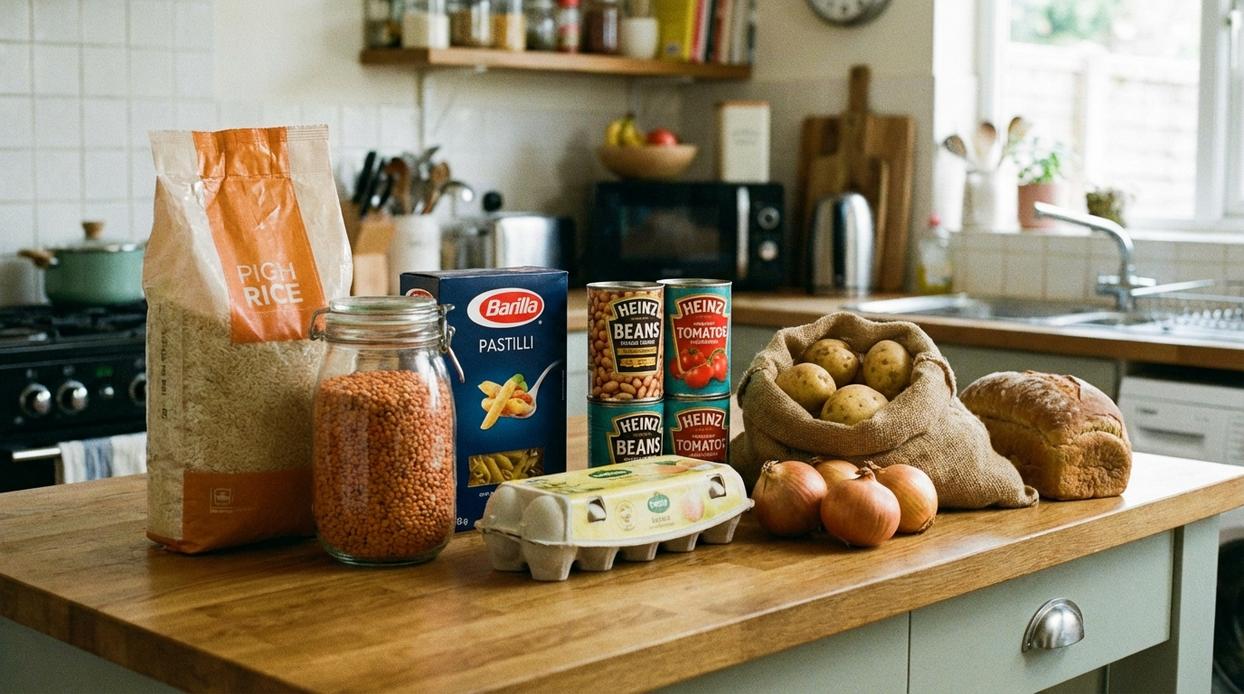
Great cooking doesn’t start with fancy ingredients; it starts with smart flavor builders. In my kitchen, these are NON-NEGOTIABLE.
Oils and vinegars come first. Keep one neutral oil like canola for high-heat cooking, and one flavorful finishing oil like olive oil. A splash of apple cider or white vinegar can brighten soups, roasted vegetables, even beans. It’s like turning up the contrast on a photo.
Onions and garlic are the backbone of savory food worldwide. Store them in a cool, dark, well-ventilated place—never the fridge—to stretch their life. Sautéed slowly, they build depth that tastes expensive but costs pennies.
Bouillon cubes or paste are my secret weapon. They’re cheaper and more compact than boxed broth, and you can stir them into rice, soups, or a quick pan sauce. Pro tip: dissolve a little in pasta water for instant savoriness.
Finally, master the core spice trio:
- Salt
- Black pepper
- A power spice like smoked paprika or cumin
With these cheap healthy pantry staples, you can build bold, flexible meals without blowing your budget. Simple beats trendy. Every. Time. Flavor first, gadgets later—that’s my kitchen philosophy. Always trust basics.
Long-Lasting Produce and Freezer Essentials
First, let’s talk root vegetables—potatoes, sweet potatoes, and carrots. These hardy staples can last weeks when stored in a cool, dark place, which means fewer grocery runs and less waste. They’re also packed with nutrients: potatoes offer potassium and vitamin C, sweet potatoes deliver beta-carotene for eye health, and carrots support immune function. Roast a large batch with olive oil and salt, and you’ve got an easy base for bowls, wraps, or quick reheats all week (meal prep magic without the fuss).
Meanwhile, frozen vegetables deserve a reputation upgrade. Contrary to popular belief, frozen produce is often picked at peak ripeness and flash-frozen, locking in nutrients comparable to fresh (Harvard T.H. Chan School of Public Health). Frozen spinach, peas, and broccoli reduce spoilage and stretch your budget. In other words, they’re cheap healthy pantry staples that actually get used.
Similarly, frozen fruit shines in smoothies, oatmeal, or as a naturally sweet dessert. Berries, especially, are typically more affordable frozen than fresh—particularly out of season.
For a little culinary exploration, try frozen spinach wilted with garlic. Use it as a side, tuck it into omelets, or blend it into a green smoothie for a subtle veggie boost (no one will notice, promise).
Your blueprint for affordable, healthy eating is simple: stock a smart pantry. As one friend told me, “I thought eating well meant spending more.” Not true. The real stress comes from last-minute takeout and pricey, processed fixes. “I’m tired of wasting money,” she said. A few cheap healthy pantry staples change that story. With beans, rice, oats, and spices, you can build countless meals that nourish your body and protect your budget. Think of them as building blocks, not limitations. Here’s your challenge: pick three items this week, plan one meal, and prove it to yourself. Start small, start today.
Make Every Dollar in Your Kitchen Count
You came here looking for practical ways to eat well without overspending — and now you have the tools to do exactly that. With smart planning, creative meal prep, and a focus on cheap healthy pantry staples, you can stretch your grocery budget without sacrificing flavor or nutrition.
Food costs are rising, and that pressure is real. It’s frustrating to feel like eating healthy always comes with a higher price tag. But the truth is, with the right staples and a simple strategy, you can take control of your kitchen and your spending at the same time.
Now it’s your move. Start by stocking up on versatile basics, plan your next week of meals around what you already have, and commit to one new budget-friendly recipe. Small shifts create big savings.
If you’re ready to lower your grocery bill, simplify meal prep, and still enjoy satisfying meals, explore more of our proven budget-friendly food guides. Thousands of savvy home cooks are already transforming their kitchens with these strategies — join them and start saving today.
 Operations Manager
Hilary Jamesuels writes the kind of helpful reads content that people actually send to each other. Not because it's flashy or controversial, but because it's the sort of thing where you read it and immediately think of three people who need to see it. Hilary has a talent for identifying the questions that a lot of people have but haven't quite figured out how to articulate yet — and then answering them properly.
They covers a lot of ground: Helpful Reads, Frugal Fusion Cuisine, Meal Prep Hacks on a Budget, and plenty of adjacent territory that doesn't always get treated with the same seriousness. The consistency across all of it is a certain kind of respect for the reader. Hilary doesn't assume people are stupid, and they doesn't assume they know everything either. They writes for someone who is genuinely trying to figure something out — because that's usually who's actually reading. That assumption shapes everything from how they structures an explanation to how much background they includes before getting to the point.
Beyond the practical stuff, there's something in Hilary's writing that reflects a real investment in the subject — not performed enthusiasm, but the kind of sustained interest that produces insight over time. They has been paying attention to helpful reads long enough that they notices things a more casual observer would miss. That depth shows up in the work in ways that are hard to fake.
Operations Manager
Hilary Jamesuels writes the kind of helpful reads content that people actually send to each other. Not because it's flashy or controversial, but because it's the sort of thing where you read it and immediately think of three people who need to see it. Hilary has a talent for identifying the questions that a lot of people have but haven't quite figured out how to articulate yet — and then answering them properly.
They covers a lot of ground: Helpful Reads, Frugal Fusion Cuisine, Meal Prep Hacks on a Budget, and plenty of adjacent territory that doesn't always get treated with the same seriousness. The consistency across all of it is a certain kind of respect for the reader. Hilary doesn't assume people are stupid, and they doesn't assume they know everything either. They writes for someone who is genuinely trying to figure something out — because that's usually who's actually reading. That assumption shapes everything from how they structures an explanation to how much background they includes before getting to the point.
Beyond the practical stuff, there's something in Hilary's writing that reflects a real investment in the subject — not performed enthusiasm, but the kind of sustained interest that produces insight over time. They has been paying attention to helpful reads long enough that they notices things a more casual observer would miss. That depth shows up in the work in ways that are hard to fake.