
Stretching your grocery budget without sacrificing flavor can feel overwhelming—especially with rising food costs and endless meal ideas competing for your attention. If you’re searching for practical, realistic ways to make delicious meals on less, this guide is designed with you in mind. We’ll break down smart budget meal planning strategies, affordable ingredient swaps, low-cost culinary exploration ideas, and time-saving meal prep hacks that actually work in everyday kitchens.
This article focuses on helping you plan satisfying, cost-effective meals while reducing waste and avoiding last-minute takeout. Every tip is grounded in real-world frugal cooking methods, tested combinations, and proven planning techniques that make the most of simple ingredients. Whether you’re cooking for one or feeding a family, you’ll find actionable steps to lower your food expenses, expand your menu, and make your kitchen routine more efficient—without giving up taste or variety.
The Foundation: Your 3-Step Meal Planning Blueprint
Ever open your fridge and think, What am I even supposed to make with this? Before you buy anything, start with Step 1: The “Shop-Your-Pantry” First Approach. Take a quick weekly inventory of your fridge, freezer, and pantry. What’s about to expire? What’s hiding in the back? (Yes, even that half-bag of rice.) Build meals around what you already have. This simple habit cuts waste and stretches your grocery budget—key to smart budget meal planning.
Next, try Step 2: The Thematic Calendar. Have you ever noticed how restaurants simplify choices? Taco Tuesday isn’t random—it reduces decision fatigue (real term: the mental drain from too many choices). Assign themes like Meatless Monday or Stir-Fry Friday. Suddenly, your shopping list writes itself.
Finally, Step 3: Master the “Cook Once, Eat Thrice” Rule. Why cook chicken once when it can become tacos, soup, and salad? Roast a big batch of versatile staples like quinoa or shredded chicken. Leftovers aren’t boring—they’re strategic. Pro tip: season base ingredients lightly so they adapt to different cuisines.
Simple system. Fewer decisions. More savings. Sound like something your week could use?
Grocery Store Mastery: Secrets to Slashing Your Spending
Walk into a grocery store without a plan and it’s basically a treasure hunt designed by marketers (and you’re not the one finding the treasure). Instead, let’s make every trip strategic.
The Power of the Perimeter
First, start with the outer aisles. This area typically holds whole foods—fresh produce, meat, dairy, and eggs. Whole foods are ingredients in their natural state, meaning less processing and often better value per nutrient (Harvard T.H. Chan School of Public Health). For example, a $2 bag of carrots can stretch across soups, stir-fries, and snacks—while a $5 box of processed snack packs disappears in a day.
That said, some argue the perimeter rule ignores affordable pantry staples inside the store. Fair point. Rice, oats, and beans live in inner aisles—and they’re budget heroes. The key isn’t avoiding the center entirely; it’s entering with purpose.
Unit Pricing Is Your Best Friend
Unit price shows cost per ounce, pound, or liter. Ignore flashy packaging and compare this number instead.
| Item | Package Price | Unit Price | Better Deal |
|---|---|---|---|
| Brand A Rice (1 lb) | $1.50 |
$1.50/lb | |
| Brand B Rice (3 lb) | $3.60 | $1.20/lb | ✅ |
Step-by-step: 1) Find the shelf tag. 2) Compare unit prices. 3) Choose the lowest cost per unit.
Seasonal and Sales-Driven Shopping
Next, build meals around what’s on sale and in season. Strawberries in June? Cheaper and sweeter. Planning this way makes budget meal planning practical and flavorful (USDA Seasonal Produce Guide).
Finally, try “Frugal Fusion.” Stock low-cost, high-impact ingredients—lentils, soy sauce, cumin, curry paste. A plain pot of beans becomes taco filling, curry, or Mediterranean salad with just a spice shift. Pro tip: buy spices in bulk bins to save up to 50% (Consumer Reports).
Small shifts. Big savings. And yes—you’ll still eat well.
Meal Prep Hacks That Actually Save You Time and Money

Meal prep gets a bad rap. Some people argue it steals your Sunday and locks you into bland, repetitive meals (the dreaded chicken-broccoli-rice routine). Fair. But done right, it actually gives you flexibility, flavor, and serious savings.
Component Prepping vs. Full Meal Prepping
Full meal prepping means cooking entire dishes in advance—five identical lunches lined up like edible dominoes. Convenient, yes. Flexible? Not always.
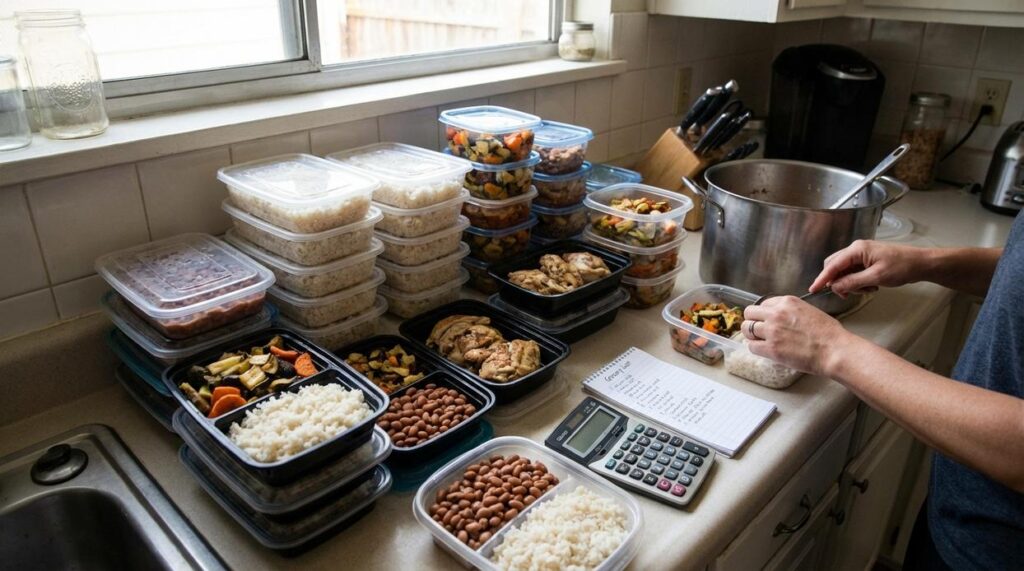
Component prepping is different. You prep building blocks: roasted vegetables that smell sweet and caramelized, fluffy grains, shredded chicken, chopped herbs. Mix and match all week. Tuesday’s grain bowl becomes Thursday’s stir-fry with a quick sizzle in a hot pan. Pro tip: season lightly upfront so flavors don’t clash later.
Batch Cooking for the Freezer
A freezer stocked with ready meals is your shield against takeout temptation (and those $40 “quick” orders).
- Hearty chili
- Vegetable soup
- Chicken pot pie filling
- Baked ziti
- Lentil stew
These reheat beautifully, bubbling and fragrant, saving money according to USDA data showing Americans waste up to 30–40% of food annually (USDA, 2023).
The “Flavor Bomb” Technique
Small, intense add-ins transform basics. Think emerald herb oil drizzled over rice, garlicky compound butter melting into vegetables, jammy caramelized onions folded into eggs. Store in ice cube trays for instant upgrades.
Pair this with smart budget meal planning and even basics like rice and beans reimagined affordable protein combos feel gourmet.
Smart Storage Solutions
Glass containers keep flavors clean and visible. Vacuum sealing reduces freezer burn by limiting oxygen exposure (FDA guidance). Proper storage means fewer slimy surprises—and more fresh-tasting meals all week.
Beyond the Basics: Low-Cost Culinary Exploration
Think eating on a budget means bland chicken and plain rice? Not even close. With the right spices, herbs, and cooking techniques, simple ingredients become global flavor tours. A pinch of smoked paprika turns roasted potatoes Spanish, while cumin and chili flakes shift black beans toward Tex-Mex territory. Suddenly, frugal feels exciting—and your taste buds reap the rewards.
Even better, leftovers become opportunities. Roasted vegetables can slide into a frittata, blend into a hearty soup, or top a flatbread for a quick “frugal fusion” dinner. Last night’s rice? Stir-fry it with soy sauce and frozen veggies for takeout vibes without the bill. The benefit is clear: less waste, more variety, and extra money staying in your wallet.
Meanwhile, a small windowsill herb garden delivers fresh basil, parsley, or mint for pennies. That’s flavor on demand—an effortless upgrade that makes budget meal planning feel abundant, not restrictive.
Make Every Meal Count Without Overspending
You came here looking for smarter ways to stretch your grocery budget without sacrificing flavor or variety. Now you have practical strategies to simplify shopping, reduce waste, and turn affordable ingredients into meals you actually look forward to eating.
The truth is, rising food costs and limited time can make cooking at home feel overwhelming. That frustration of watching your grocery bill climb while your fridge sits half-used is real. But with the right approach to budget meal planning, you can take control of your spending, cut waste, and still enjoy creative, satisfying dishes.
Here’s your next step: choose one strategy from this guide and put it into action this week. Plan three meals, shop with intention, and prep ahead so busy days don’t derail you. Small, consistent changes lead to serious savings.
Thousands of readers rely on our proven, budget-friendly meal strategies to lower their grocery bills and simplify their kitchens. If you’re ready to stop overspending and start cooking smarter, dive into more of our meal prep hacks and start your next plan today.
 Operations Manager
Hilary Jamesuels writes the kind of helpful reads content that people actually send to each other. Not because it's flashy or controversial, but because it's the sort of thing where you read it and immediately think of three people who need to see it. Hilary has a talent for identifying the questions that a lot of people have but haven't quite figured out how to articulate yet — and then answering them properly.
They covers a lot of ground: Helpful Reads, Frugal Fusion Cuisine, Meal Prep Hacks on a Budget, and plenty of adjacent territory that doesn't always get treated with the same seriousness. The consistency across all of it is a certain kind of respect for the reader. Hilary doesn't assume people are stupid, and they doesn't assume they know everything either. They writes for someone who is genuinely trying to figure something out — because that's usually who's actually reading. That assumption shapes everything from how they structures an explanation to how much background they includes before getting to the point.
Beyond the practical stuff, there's something in Hilary's writing that reflects a real investment in the subject — not performed enthusiasm, but the kind of sustained interest that produces insight over time. They has been paying attention to helpful reads long enough that they notices things a more casual observer would miss. That depth shows up in the work in ways that are hard to fake.
Operations Manager
Hilary Jamesuels writes the kind of helpful reads content that people actually send to each other. Not because it's flashy or controversial, but because it's the sort of thing where you read it and immediately think of three people who need to see it. Hilary has a talent for identifying the questions that a lot of people have but haven't quite figured out how to articulate yet — and then answering them properly.
They covers a lot of ground: Helpful Reads, Frugal Fusion Cuisine, Meal Prep Hacks on a Budget, and plenty of adjacent territory that doesn't always get treated with the same seriousness. The consistency across all of it is a certain kind of respect for the reader. Hilary doesn't assume people are stupid, and they doesn't assume they know everything either. They writes for someone who is genuinely trying to figure something out — because that's usually who's actually reading. That assumption shapes everything from how they structures an explanation to how much background they includes before getting to the point.
Beyond the practical stuff, there's something in Hilary's writing that reflects a real investment in the subject — not performed enthusiasm, but the kind of sustained interest that produces insight over time. They has been paying attention to helpful reads long enough that they notices things a more casual observer would miss. That depth shows up in the work in ways that are hard to fake.