Trying to eat well on a budget can feel overwhelming, especially when every package claims to be “healthy,” “natural,” or “low fat.” If you’ve ever stood in the grocery aisle comparing labels and wondering what actually matters, this guide is for you. We’re breaking down how to read food labels so you can make smarter, budget-friendly choices without sacrificing nutrition or flavor.
This article focuses on what shoppers really need to know: which numbers deserve your attention, how to spot hidden sugars and unnecessary additives, and how to compare products quickly to get the best value for your money. Instead of marketing buzzwords, we rely on current nutrition guidelines and evidence-based recommendations to explain what’s truly important.
By the end, you’ll know exactly how to decode ingredient lists, understand serving sizes, and choose affordable foods that support your goals—whether you’re meal prepping, cooking from scratch, or stretching every dollar at the store.
Your Secret Weapon at the Store
Nutrition labels aren’t fine print; they’re POWER tools for your budget and body. Yet many shoppers feel overwhelmed, toss items into the cart, and hope for the best (we’ve all been there). Confusion leads to sugary bargains and pricey ‘health’ foods that don’t deliver value. Here’s how to read food labels and WIN at every aisle:
- Compare price per serving, not just package cost
- Scan ingredient order; the first three tell the real story
- Check added sugars and sodium against daily percentages
Choose products with fewer additives and MORE nutrients for your dollar today.
Start Here: Serving Size and Calories Per Serving
If you learn nothing else about how to read food labels, learn this: everything on the package is based on one Serving Size. And that serving is often much smaller than what you’d actually eat.
I once heard someone say, “Wait… this whole bag isn’t 150 calories?” Nope. That’s per serving—and there might be three servings in that tiny bag.
Right under serving size, you’ll see Servings Per Container. This is the real budget hack. If a frozen meal lists 2 servings per tray, you’re doubling the calories and mentally adjusting the cost per meal. A $4 dish suddenly becomes $8 if it takes two servings to feel full.
Calories are simply a measure of energy (technically, kilocalories) your body uses for fuel (FDA, 2022). But 300 calories from nuts fuels you differently than 300 calories from soda. As one dietitian told me, “Calories tell you how much. Ingredients tell you how well.”
- Pro tip: Multiply calories and nutrients by servings per container before deciding if it’s truly a deal.
Sometimes the “cheap” item hides tiny servings, while a slightly pricier option stretches further. The real cost isn’t the sticker price—it’s the cost per satisfying meal. (And nobody budgets for being hungry an hour later.)
Decoding the Engine Room: Fat, Carbs, and Protein
If you’ve ever flipped over a package and felt confused, you’re not alone. Learning how to read food labels can feel like decoding a secret language. However, once you understand the “engine room” — fat, carbohydrates, and protein — you can stretch both your health and your grocery budget.
Fat: Friend or Foe?
First, not all fats are created equal. Saturated and trans fats (often found in fried foods and packaged snacks) should be limited because high intake is linked to heart disease (American Heart Association). In contrast, unsaturated fats — like those in olive oil, nuts, and avocados — support heart health and improve satiety (the feeling of fullness).
In practical terms, adding peanut butter to oatmeal or using olive oil in beans can keep you full longer. That means fewer snack runs and better budget control. (Yes, fullness is financial strategy.)
Carbohydrates: Look Beyond the Hype
Next, break carbs into three parts: dietary fiber, total sugars, and added sugars.
- Dietary fiber: Aim higher. Fiber supports digestion and helps lower cholesterol (Mayo Clinic). More fiber = more staying power.
- Total sugars: Includes natural and added.
- Added sugars: Aim lower. These offer calories without nutrients.
High-fiber foods like oats, lentils, and brown rice deliver better value per serving because they satisfy longer.
Protein: The Budget Multiplier
Finally, protein helps maintain muscle and increases fullness (Harvard T.H. Chan School of Public Health). When comparing yogurt or bread, check protein per serving. If one yogurt has 15g and another has 8g for the same price, the higher-protein option may keep you satisfied longer.
For more smart grocery strategies, explore the psychology of spending less on groceries.
Getting More Bang for Your Buck: Nutrients and Percent Daily Value (%DV)
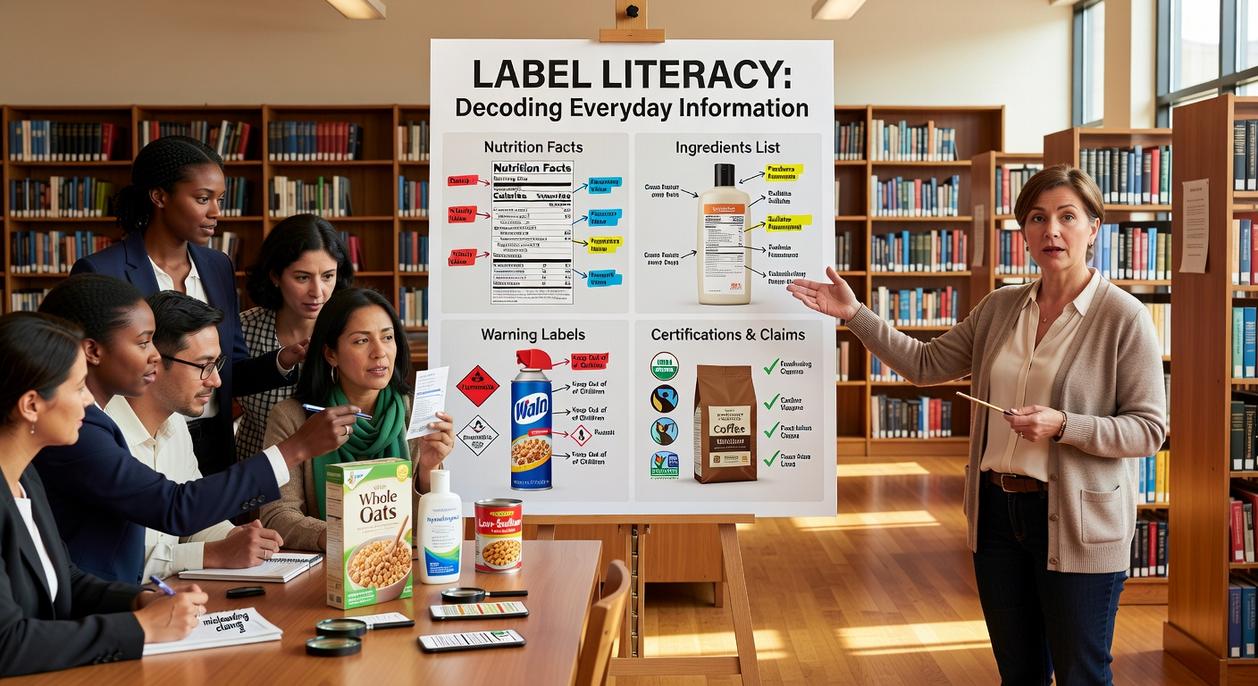
Food labels can feel like fine print on a credit card offer. So let’s simplify.
The Percent Daily Value (%DV) tells you how much a nutrient in one serving contributes to your daily needs, based on a 2,000-calorie diet (FDA). Think of it as a shortcut for how to read food labels without a nutrition degree.
Here’s the quick rule:
- 5% DV or less = low
- 20% DV or more = high
That’s the 5/20 rule. If you want more of something, aim for 20%. If you’re trying to limit it, stick closer to 5%.
Nutrients to Get More Of
These give you more nutritional “bang” per bite:
- Fiber
- Vitamin D
- Calcium
- Iron
- Potassium
Many Americans fall short on these nutrients (Dietary Guidelines for Americans). Higher %DV here? That’s value.
Nutrients to Limit
Often high in ultra-processed foods:
- Saturated Fat
- Sodium
- Added Sugars
Counterpoint: some argue calories matter most. True—but quality counts. A cheap snack high in added sugar may fill you up, but it won’t fuel you for long.
Actionable tip: Compare two canned tomato brands. If prices are similar, choose the one with lower sodium and higher potassium. Same cost. Smarter buy. (Your wallet and your heart both win.)
The Ingredient List: What’s Really in Your Food?
Here’s the number one rule I wish everyone memorized: ingredients are listed by weight, from most to least. That means the first three to five ingredients make up the bulk of what you’re eating. If sugar, water, or a cheap filler like corn syrup shows up early, you’re overpaying for a low-quality product.
In my opinion, this is where grocery budgets leak money. We assume the front label tells the story, but the back label tells the truth. For example, that “whole grain” cereal might be mostly refined flour with a sprinkle of oats.
So, how to read food labels starts with scanning the top of the list. Look for whole foods—like chicken, beans, oats, or tomatoes—first. Generally speaking, shorter ingredient lists with recognizable names signal less processing and better value. If you can’t pronounce half the list, I put it back.
Let’s pull it all together. First, master serving sizes—the amount the nutrition facts are based on—so you’re not accidentally doubling calories. Next, prioritize fiber and protein, nutrients that keep you full longer. Then, use the 5/20 rule: 5% Daily Value (DV) is low, 20% is high. Finally, scan the first few ingredients, since they’re listed by weight.
In other words, learning how to read food labels turns confusion into a clear, budget-friendly roadmap. Rather than trusting flashy claims (they’re basically movie trailers for cereal), rely on facts. On your next grocery trip, try just one tip and see the difference.
By mastering the art of reading food labels to uncover hidden costs, you can not only make healthier choices but also complement the money-saving strategies highlighted in our must-read article on frugal living and smart spending – for more details, check out our Must-Read Books on Frugal Living and Smart Spending.
Make Every Grocery Trip Work Harder for You
You wanted to learn how to stretch your food budget without sacrificing flavor, variety, or nutrition. Now you have practical strategies to plan smarter, shop wiser, and turn simple ingredients into satisfying meals.
The real challenge isn’t just rising grocery prices — it’s feeling like you have to choose between eating well and staying on budget. With better meal prep habits, smarter swaps, and a clear understanding of how to read food labels, you’re no longer stuck guessing. You’re making informed choices that protect both your wallet and your health.
Now it’s time to put this into action. Pick one new budget-friendly recipe to try this week. Review the labels in your pantry. Plan your next grocery trip with intention instead of impulse.
If you’re ready to cut your grocery bill without cutting flavor, start applying these tips today. Thousands of savvy home cooks are already transforming tight budgets into creative, delicious meals — and you can too. Take control of your cart, your kitchen, and your spending starting now.
 Nolissa Orvandora writes the kind of fresh insights content that people actually send to each other. Not because it's flashy or controversial, but because it's the sort of thing where you read it and immediately think of three people who need to see it. Nolissa has a talent for identifying the questions that a lot of people have but haven't quite figured out how to articulate yet — and then answering them properly.
They covers a lot of ground: Fresh Insights, Frugal Fusion Cuisine, Low-Cost Culinary Exploration, and plenty of adjacent territory that doesn't always get treated with the same seriousness. The consistency across all of it is a certain kind of respect for the reader. Nolissa doesn't assume people are stupid, and they doesn't assume they know everything either. They writes for someone who is genuinely trying to figure something out — because that's usually who's actually reading. That assumption shapes everything from how they structures an explanation to how much background they includes before getting to the point.
Beyond the practical stuff, there's something in Nolissa's writing that reflects a real investment in the subject — not performed enthusiasm, but the kind of sustained interest that produces insight over time. They has been paying attention to fresh insights long enough that they notices things a more casual observer would miss. That depth shows up in the work in ways that are hard to fake.
Nolissa Orvandora writes the kind of fresh insights content that people actually send to each other. Not because it's flashy or controversial, but because it's the sort of thing where you read it and immediately think of three people who need to see it. Nolissa has a talent for identifying the questions that a lot of people have but haven't quite figured out how to articulate yet — and then answering them properly.
They covers a lot of ground: Fresh Insights, Frugal Fusion Cuisine, Low-Cost Culinary Exploration, and plenty of adjacent territory that doesn't always get treated with the same seriousness. The consistency across all of it is a certain kind of respect for the reader. Nolissa doesn't assume people are stupid, and they doesn't assume they know everything either. They writes for someone who is genuinely trying to figure something out — because that's usually who's actually reading. That assumption shapes everything from how they structures an explanation to how much background they includes before getting to the point.
Beyond the practical stuff, there's something in Nolissa's writing that reflects a real investment in the subject — not performed enthusiasm, but the kind of sustained interest that produces insight over time. They has been paying attention to fresh insights long enough that they notices things a more casual observer would miss. That depth shows up in the work in ways that are hard to fake.