
If you’ve ever walked into the grocery store for “just a few things” and walked out wondering how you spent so much, you’re not alone. The truth is, saving money on food isn’t just about coupons and sales—it’s about understanding grocery spending psychology and how subtle cues influence what ends up in your cart.
This article is designed for budget-conscious shoppers who want practical, realistic ways to lower food costs without sacrificing flavor or variety. You’ll learn how stores encourage impulse buys, how meal planning reduces decision fatigue, and how small habit shifts can lead to consistent savings over time.
We’ve analyzed consumer behavior research, pricing strategies, and real-world budgeting techniques to bring you strategies that actually work in everyday life. Whether you’re feeding a family or cooking for one, you’ll walk away with clear, actionable steps to stretch your grocery budget further—without feeling deprived.
First, supermarkets aren’t accidental. From endcaps stacked with BOGO cereal to milk parked in the far back corner, every layout choice nudges you to wander. That extra wandering time? It’s profit. In fact, grocery spending psychology explains why lighting, music tempo, and even cart size quietly boost totals (yes, bigger carts equal bigger bills).
However, it’s not just tricks. Local stores in the Midwest rotate seasonal displays—think chili fixings during playoff season—because data shows shoppers respond to context. Some argue impulse buys are just weak willpower. Not quite. Design matters.
So before checkout, pause, scan your cart, and edit wisely.
The Hidden Psychology of Your Shopping List
Have you ever walked into a supermarket for “just milk” and walked out $75 lighter? That’s not a lack of willpower. That’s design.
First, consider decision fatigue—the mental exhaustion that happens after making too many choices. A typical grocery store carries 30,000+ items (Food Marketing Institute). Every comparison—brand vs. store brand, organic vs. conventional—drains you. By aisle nine, your brain wants easy, comforting decisions. So what happens? You toss in the cookies. (Because thinking is hard and chocolate is easy.) This is grocery spending psychology at work.
Then there’s the power of habit—your personal “default setting.” Do you automatically grab the same cereal every week? Behavioral economists call this the status quo bias, our tendency to prefer what’s familiar (Samuelson & Zeckhauser, 1988). It feels efficient. But is it saving you money? Or just saving you thought?
On top of that, emotions sneak in. Before shopping, try the HALT check:
- Hungry
- Angry
- Lonely
- Tired
Are you any of these? If so, your cart might become therapy. Studies show hungry shoppers buy more high-calorie foods (Tal & Wansink, 2013). Sound familiar?
Finally, beware the health halo—when words like “natural” or “organic” make us assume a product is healthier than it is. Research shows these labels can inflate perceived nutrition and justify higher prices (Schuldt & Schwarz, 2010). But have you flipped the package over?
So next time you shop, pause. Ask yourself: Am I choosing—or reacting?
How Supermarkets Engineer Your Spending Habits

Walking into a supermarket isn’t just shopping—it’s entering a carefully designed maze. Think of it like a casino without slot machines. The house always has a strategy.
The Store Layout Maze
Staples like milk and bread sit at opposite ends of the store for a reason. You came in for two things, but now you’re trekking past cookies, frozen pizzas, and “buy one, get one” pasta. The layout works like a scenic route on a road trip: the longer the drive, the more billboards you see. Retail analysts call this part of grocery spending psychology—subtle environmental nudges that increase exposure and, ultimately, spending (Journal of Retailing, 2014).
The Science of Shelf Placement
Eye-level shelves are prime real estate. That’s where premium, higher-margin brands sit. Budget store brands? They’re playing hide-and-seek on the top or bottom shelves. It’s not random. Studies show products placed at eye level sell significantly more than those requiring effort to reach (Nielsen, 2018). Like movie posters at the center of a theater lobby, what’s easiest to see feels like the main attraction.
Sensory Marketing Tactics
That warm bread smell? Often intentional. Pleasant scents increase dwell time and spending (Spangenberg et al., 2006). Add calming music and free samples, and your cart fills almost on autopilot. It’s a soft-focus filter for your wallet.
End-Caps and Checkout Temptations
End-caps are the stage lights of retail—high visibility, high margin. Checkout aisles stock candy and gadgets because decision fatigue peaks there (Baumeister & Tierney, 2011). Build discipline like a muscle: shop with a list, eat beforehand, and focus on seasonal eating why its cheaper and healthier (https://lovinglifeandlivingonless.com.co/seasonal-eating-why-its-cheaper-and-healthier/). Your budget will thank you.
Practical Strategies to Master Your Grocery Game
Groceries are one of the easiest budgets to blow—and one of the easiest to fix. You don’t need extreme couponing or a backyard farm. You need a smarter system.
The Reverse Meal Plan Method
Most people ask, “What do I want to eat this week?” Then they shop. Flip it. Start with the weekly sales flyer and build meals around what’s deeply discounted. If chicken thighs, broccoli, and rice are on sale, that’s stir-fry night. If canned tomatoes and pasta are marked down, hello homemade marinara.
Some argue this limits creativity. In reality, constraints spark it (just ask any “Chopped” contestant). When you let price guide planning, you cut impulse buys and work with—not against—grocery spending psychology.
Become a Unit Price Expert
Big packaging and flashy SALE tags can trick your brain. The real test? Unit price.
Step-by-step:
- Look at the shelf tag for price per ounce, pound, or count.
- Compare across brands and sizes.
- Ignore bold red stickers—trust the math.
Sometimes the “family size” costs more per ounce. PRO TIP: Snap a quick photo of unit prices when comparing regularly purchased items so you remember the best value next time.
Build a Frugal Fusion Pantry
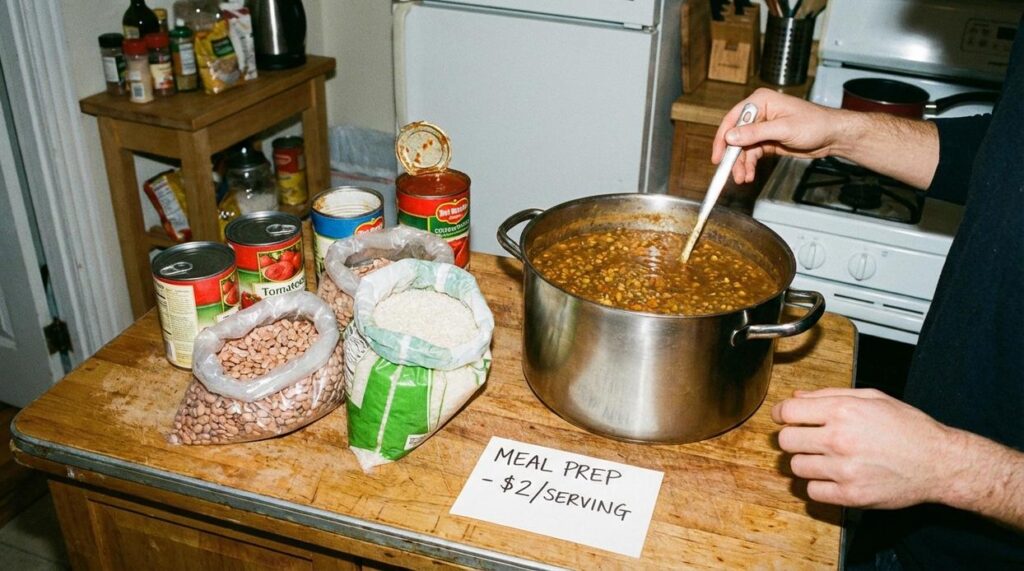
Keep these versatile staples on hand:
- Lentils
- Rice
- Canned tomatoes
- Beans
- Pasta
- Oats
- Potatoes
- Eggs
- Onions
- Basic spices
With these, you can make soups, curries, burrito bowls, shakshuka, fried rice, or hearty salads. LOW COST doesn’t mean low flavor.
The 30-Minute Meal Prep Hack
On Sunday, wash and chop veggies, portion snacks, and cook one base grain. Store everything in clear containers. After a long workday, seeing ready-to-use ingredients reduces the temptation for takeout (because tired-you will choose EASY every time).
Small systems. Big savings. CONSISTENCY beats motivation every week.
Now that you recognize the forces behind your cart choices, you can shop with intention. The frustration of overspending isn’t a personal flaw—it’s a predictable response to grocery spending psychology and store layouts engineered to nudge you. So take back control.
Start simple:
- Try reverse meal planning: build meals from what you already have.
- Compare unit prices, not just sticker prices.
Small shifts create big savings. Pick one tactic and use it on your very next trip. Momentum beats perfection (every time). Your budget will reflect the difference. Consistency compounds faster than coupons ever could. Start this week.
Make Every Grocery Dollar Work Harder for You
You started this journey looking for smarter ways to stretch your food budget without sacrificing flavor, variety, or joy in your kitchen. Now you have practical strategies, creative meal ideas, and a clearer understanding of grocery spending psychology—the hidden habits that quietly drain your wallet each week.
The truth is, rising food costs can make anyone feel frustrated and stuck. Overspending at the store often isn’t about lack of discipline—it’s about not having a simple, repeatable plan. When you combine intentional shopping, frugal fusion meals, and smart prep systems, you take back control.
Here’s your next step: put one strategy into action this week. Plan three budget-friendly meals, shop with a focused list, and track what you actually spend. Small, consistent tweaks lead to big savings over time.
If you’re ready to cut grocery bills without giving up meals you love, start applying these proven, budget-tested tips today. Thousands of readers rely on these practical strategies to simplify shopping and save more every month—now it’s your turn. Take control of your cart and make every dollar count.
 Marketing & Communications Specialist
Kimberly Morrisoilers writes the kind of low-cost culinary exploration content that people actually send to each other. Not because it's flashy or controversial, but because it's the sort of thing where you read it and immediately think of three people who need to see it. Kimberly has a talent for identifying the questions that a lot of people have but haven't quite figured out how to articulate yet — and then answering them properly.
They covers a lot of ground: Low-Cost Culinary Exploration, Meal Prep Hacks on a Budget, Helpful Reads, and plenty of adjacent territory that doesn't always get treated with the same seriousness. The consistency across all of it is a certain kind of respect for the reader. Kimberly doesn't assume people are stupid, and they doesn't assume they know everything either. They writes for someone who is genuinely trying to figure something out — because that's usually who's actually reading. That assumption shapes everything from how they structures an explanation to how much background they includes before getting to the point.
Beyond the practical stuff, there's something in Kimberly's writing that reflects a real investment in the subject — not performed enthusiasm, but the kind of sustained interest that produces insight over time. They has been paying attention to low-cost culinary exploration long enough that they notices things a more casual observer would miss. That depth shows up in the work in ways that are hard to fake.
Marketing & Communications Specialist
Kimberly Morrisoilers writes the kind of low-cost culinary exploration content that people actually send to each other. Not because it's flashy or controversial, but because it's the sort of thing where you read it and immediately think of three people who need to see it. Kimberly has a talent for identifying the questions that a lot of people have but haven't quite figured out how to articulate yet — and then answering them properly.
They covers a lot of ground: Low-Cost Culinary Exploration, Meal Prep Hacks on a Budget, Helpful Reads, and plenty of adjacent territory that doesn't always get treated with the same seriousness. The consistency across all of it is a certain kind of respect for the reader. Kimberly doesn't assume people are stupid, and they doesn't assume they know everything either. They writes for someone who is genuinely trying to figure something out — because that's usually who's actually reading. That assumption shapes everything from how they structures an explanation to how much background they includes before getting to the point.
Beyond the practical stuff, there's something in Kimberly's writing that reflects a real investment in the subject — not performed enthusiasm, but the kind of sustained interest that produces insight over time. They has been paying attention to low-cost culinary exploration long enough that they notices things a more casual observer would miss. That depth shows up in the work in ways that are hard to fake.