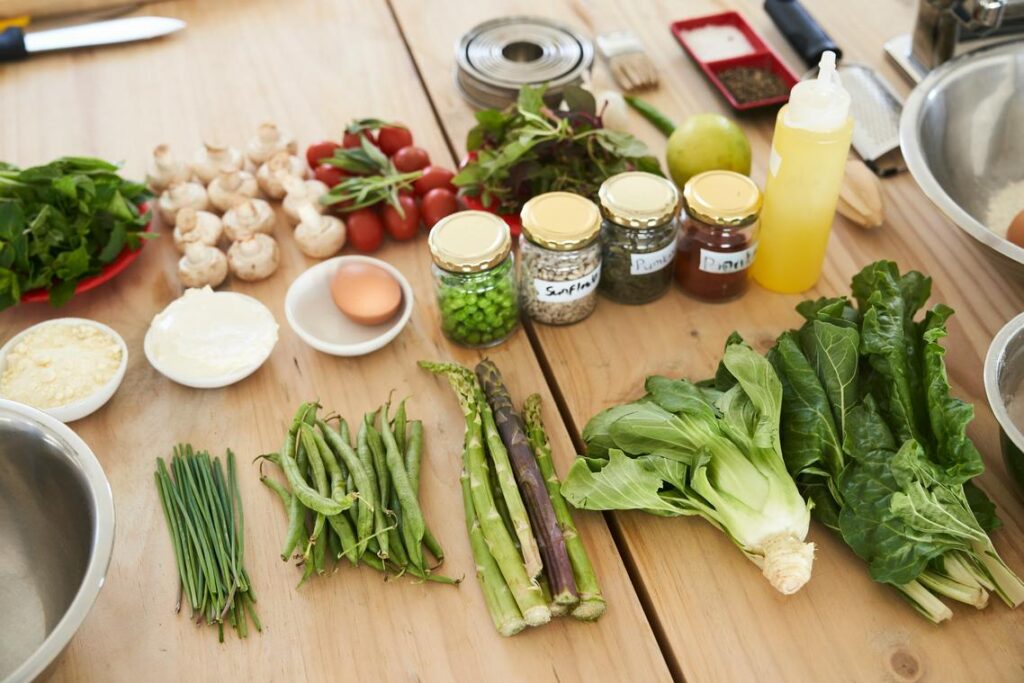

If you’re looking for practical ways to eat well without overspending, you’re in the right place. Stretching your grocery budget doesn’t mean sacrificing flavor, variety, or creativity—it means cooking smarter. This article is designed to help you make the most of every ingredient, every meal, and every dollar by focusing on strategic planning, efficient prep, and batch cooking savings that add up week after week.
Many home cooks struggle with rising food costs, food waste, and the daily stress of figuring out what’s for dinner. Here, you’ll find clear, experience-backed strategies for planning affordable meals, transforming leftovers into exciting dishes, and exploring frugal fusion ideas that keep your table interesting without increasing your bill.
Our approach is grounded in hands-on budgeting experience, practical kitchen testing, and proven meal prep methods that consistently reduce waste and maximize value. By the end, you’ll have actionable tips to simplify your routine, cut costs, and enjoy delicious meals on a realistic budget.
How Bulk Meal Prep Transforms Your Bank Account
In cities like Austin or Chicago, where takeout averages $15 a meal, the slow drip of daily lunches wrecks budgets. Meanwhile, spoiled spinach and mystery leftovers head to the landfill. Bulk meal prep—cooking multiple portions at once—stops that cycle.
Through batch cooking savings, you buy wholesale at places like Costco or H-E-B, stretch produce, and portion proteins efficiently.
For example, a $12 chicken becomes six meals.
Start with:
- Plan five core recipes
- Cook in batches Sunday afternoon
- Freeze labeled portions
Admittedly, some argue it’s repetitive; however, rotating spices keeps flavors fresh.
The Core Economics: A Breakdown of Your Savings
Let’s start with simple math. A home-prepped meal can cost about $2.50 per serving when you buy staples strategically. Compare that to an $8.00 last-minute grocery run (you know, the “I’ll just grab something quick” trip) or a $15.00 takeout order. Over five weekdays, that’s $12.50 versus $40.00 or $75.00. Stretch that across a month, and you’re looking at roughly $50 compared to $160 or $300. According to the U.S. Bureau of Labor Statistics, the average household spends thousands annually on food away from home—often double the per-meal cost of eating in (BLS Consumer Expenditure Survey).
Now, consider the power of bulk buying. Purchasing rice, oats, pasta, or dried beans in larger quantities lowers the per-unit cost—a term that simply means the price per ounce or pound. For example, a 20-pound bag of rice often costs 30–50% less per pound than smaller packages. The same principle applies to family packs of chicken or bulk lentils.
However, critics argue bulk buying leads to waste if food spoils. That’s fair—unused groceries are wasted money. Yet this is where meal planning changes the equation. Every ingredient has a defined purpose, reducing the 30–40% of food supply that the USDA estimates goes uneaten in the U.S.
In one sample weekly budget, shifting from daily purchases ($120) to planned bulk prep ($65) produced a 45% reduction. That’s real batch cooking savings—measurable, repeatable, and hard to ignore.
Your Step-by-Step Guide to Frugal Meal Prepping

Step 1: The Strategic Shopping List
Frugal meal prep starts before you turn on the stove. Build your plan around weekly sales flyers, in-season produce (which is cheaper due to higher supply), and pantry staples like rice, canned tomatoes, and spices. According to the USDA, shoppers who plan meals in advance waste less food and spend less overall. The benefit? You control impulse buys and design meals around what’s already discounted.
Key features of a strategic list:
- Sale-based proteins
- Seasonal fruits and vegetables
- Multi-use staples (rice, oats, beans)
(Pro tip: If an ingredient can work in three meals, it earns a spot in your cart.)
Step 2: Choose High-Impact, Low-Cost Ingredients
Budget-friendly powerhouses stretch further without sacrificing nutrition:
- Lentils and beans (high fiber, shelf-stable)
- Chicken thighs (often cheaper and more flavorful than breasts)
- Eggs (versatile protein)
- Oats (breakfasts, baking, even savory dishes)
- Root vegetables like carrots and potatoes (long storage life)
These ingredients form the backbone of soups, stir-fries, casseroles, and bowls—maximizing variety while keeping costs predictable.
Step 3: Master ‘Component Cooking’
Component cooking means preparing building blocks instead of full meals. Think a tray of roasted vegetables, a pot of quinoa, and shredded chicken. Mix them into grain bowls, wraps, or soups throughout the week. This method reduces flavor fatigue and increases batch cooking savings by letting you repurpose ingredients instead of repeating identical meals.
Step 4: Smart Storage for Longevity
Use airtight glass containers for durability and stain resistance, while BPA-free plastic works for lightweight portability. Cool food to room temperature before sealing to prevent condensation (which speeds spoilage). Label and freeze extras to extend shelf life by weeks.
For deeper guidance, read how to store prepped meals safely and reduce waste to protect both your budget and your food supply.
Unseen Financial Perks: The Hidden Savings of Bulk Prep
I used to be the person who swore I’d cook after work—then somehow ended up in a drive-thru line staring at a $14 receipt (again). The shift happened when I started bulk prepping on Sundays. Having a ready-made meal waiting at home didn’t just save time—it silenced the little voice saying, “You deserve takeout.” Psychologists call this decision fatigue—the mental drain that makes impulse purchases more likely (Baumeister et al., 1998). When dinner is DONE, temptation loses.
• Fewer snack splurges
• Fewer “I’m too tired” takeout runs
• More control over what’s in your fridge
Then there’s energy use. Running your oven once for sheet-pan meals instead of reheating it nightly is simply more efficient. The U.S. Department of Energy notes that ovens and stovetops are significant household energy draws; consolidating usage reduces repeated preheating costs. One hot oven. Multiple meals. Lower bills. (It feels almost rebellious.)
Transportation savings surprised me most. Fewer grocery runs mean less gas and less wear on your car—expenses the IRS even tracks with standard mileage rates because they add up. Those “quick trips” aren’t cheap.
And let’s talk about the TIME-TO-MONEY equation. Time is an asset. The hours I used to spend cooking and cleaning nightly now go toward freelancing projects, workouts, or—honestly—watching a show guilt-free. That reclaimed time has value.
Critics say bulk prep feels repetitive. Sometimes it does. But the batch cooking savings and mental clarity outweigh menu boredom.
Pro tip: Rotate sauces, not entire meals. SAME BASE, NEW FLAVOR. It keeps things interesting without blowing your budget.
Saving money on food doesn’t require extreme couponing or bland meals. It starts with planned batch cooking—making several portions at once so you’re not deciding what to eat when you’re tired (and tempted).
Here’s why it works:
• You reduce food waste by using ingredients fully.
• You benefit from economies of scale, meaning buying larger quantities lowers the cost per serving.
• You avoid impulse purchases that quietly drain your budget.
Think of it as setting your future self up for success. Try prepping three lunches this week and track your batch cooking savings. Small steps create financial wins.
Make Every Meal Count Without Overspending
You came here looking for practical ways to stretch your grocery budget without sacrificing flavor or variety — and now you have the tools to do exactly that. From smart ingredient swaps to creative leftovers and strategic planning, you’ve seen how simple shifts can dramatically lower your food costs.
The real win isn’t just cheaper meals. It’s reducing the stress of rising grocery bills, avoiding last‑minute takeout, and feeling confident that you’re feeding yourself or your family well — for less.
The key is consistency. Start planning your meals weekly. Shop with intention. Lean into batch cooking savings to cut both time and money spent in the kitchen. Small habits compound fast.
If you’re tired of overspending every time you check out at the store, now’s the moment to change it. Join thousands of savvy home cooks who are already cutting costs and eating better with our proven budget-friendly strategies. Explore more meal prep hacks, frugal recipes, and cost-cutting kitchen tips today — and start saving on your very next grocery trip.
 Marketing & Communications Specialist
Kimberly Morrisoilers writes the kind of low-cost culinary exploration content that people actually send to each other. Not because it's flashy or controversial, but because it's the sort of thing where you read it and immediately think of three people who need to see it. Kimberly has a talent for identifying the questions that a lot of people have but haven't quite figured out how to articulate yet — and then answering them properly.
They covers a lot of ground: Low-Cost Culinary Exploration, Meal Prep Hacks on a Budget, Helpful Reads, and plenty of adjacent territory that doesn't always get treated with the same seriousness. The consistency across all of it is a certain kind of respect for the reader. Kimberly doesn't assume people are stupid, and they doesn't assume they know everything either. They writes for someone who is genuinely trying to figure something out — because that's usually who's actually reading. That assumption shapes everything from how they structures an explanation to how much background they includes before getting to the point.
Beyond the practical stuff, there's something in Kimberly's writing that reflects a real investment in the subject — not performed enthusiasm, but the kind of sustained interest that produces insight over time. They has been paying attention to low-cost culinary exploration long enough that they notices things a more casual observer would miss. That depth shows up in the work in ways that are hard to fake.
Marketing & Communications Specialist
Kimberly Morrisoilers writes the kind of low-cost culinary exploration content that people actually send to each other. Not because it's flashy or controversial, but because it's the sort of thing where you read it and immediately think of three people who need to see it. Kimberly has a talent for identifying the questions that a lot of people have but haven't quite figured out how to articulate yet — and then answering them properly.
They covers a lot of ground: Low-Cost Culinary Exploration, Meal Prep Hacks on a Budget, Helpful Reads, and plenty of adjacent territory that doesn't always get treated with the same seriousness. The consistency across all of it is a certain kind of respect for the reader. Kimberly doesn't assume people are stupid, and they doesn't assume they know everything either. They writes for someone who is genuinely trying to figure something out — because that's usually who's actually reading. That assumption shapes everything from how they structures an explanation to how much background they includes before getting to the point.
Beyond the practical stuff, there's something in Kimberly's writing that reflects a real investment in the subject — not performed enthusiasm, but the kind of sustained interest that produces insight over time. They has been paying attention to low-cost culinary exploration long enough that they notices things a more casual observer would miss. That depth shows up in the work in ways that are hard to fake.